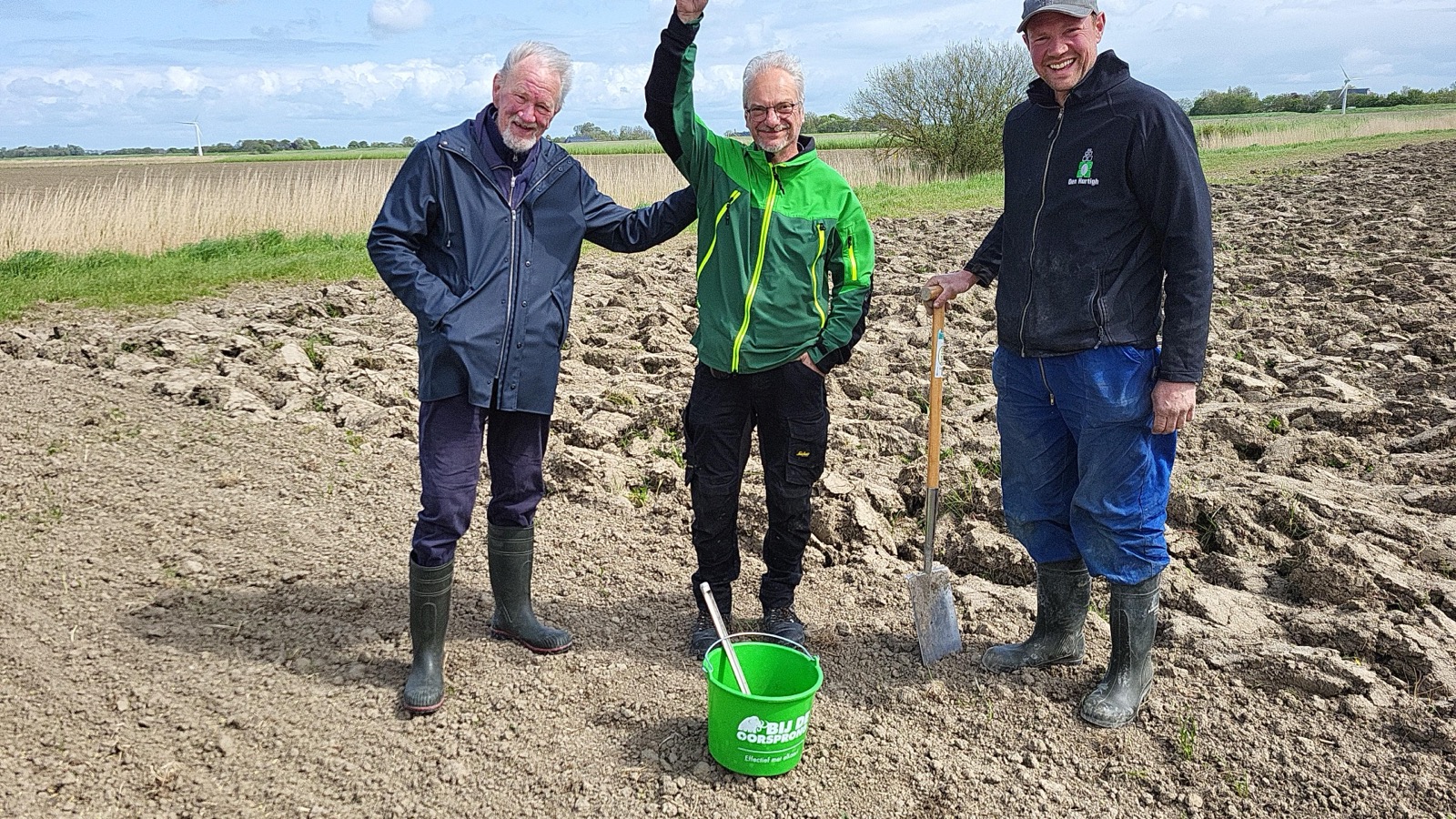
Intensive Guidance
What does it entail?
-
World-class expertise: You will work directly with Dietmar Näser, the founder of the successful Näser/Wenz method, and Jason Hobson, expert in plant sap analysis and former CEO of Advancing Eco Agriculture.
-
Practical knowledge: Erwin Westers from Horaholm, a pioneer in the Netherlands, shares his practical experiences and provides support in practical application.
-
Data-driven approach: SoilBeat, our advanced data platform, helps you monitor progress and optimize fertilization plans.
-
Individual approach: We tailor the program to your specific needs and the circumstances of your company.
Why Intensive Guidance?
-
Maximize your results: Gain insight into best practices and get the most out of your regenerative farming practices.
-
Reduce your risks: Avoid costly mistakes and learn from the experiences of experts.
-
Accelerate your transition: Make a rapid and successful switch to regenerative agriculture.
Sign up now and start improving your business today!

Practice & E-learning
Regenerative Agriculture Practical Course: Learn Step-by-Step How to Optimize Your Soil
Are you a farmer who likes to get your hands dirty? Do you want to get started with regenerative agriculture right away?
Then our practical course is perfect for you! In this course you will learn from experienced experts how you can directly apply the principles of regenerative agriculture to your own business.
What will you learn in the practical course?
You will learn the five steps of regenerative soil building:
-
Fertilization: Learn how to convert organic fertilizers into soil-living nutrients.
-
Greening: Discover the power of green manure before, during and after cultivation.
-
Surface Digestion: Learn how to compost green manure and enrich your soil.
-
Digestion Process: Control the digestion process and prevent putrefaction and decomposition.
-
Vitalization: Learn how to vitalize crops with compost tea and foliar sprays.
In addition to these five steps, you will also learn:
-
Improving soil health and stimulating soil life.
-
Optimally care for crops using natural methods.
-
Effective weed and pest control strategies without chemicals.
-
Making your business more resilient to climate change.
-
Run your business more efficiently and save costs.
The practical course is interactive and practice-oriented. You will work with concrete exercises and experiments on your own company. This way you will not only learn the theory, but also how to put it into practice.
After the course:
-
Do you have a deep understanding of regenerative agriculture principles?
-
Can you apply these principles to your own business?
-
Are you part of a network of like-minded farmers?
Register now for the practical course and start your regenerative journey!

E-Learning
Designed by Dietmar Naeser
E-learning: Deepen your knowledge of regenerative agriculture, at your own pace
The Dutch Regenerative Alliance e-learning modules offer you the flexibility to deepen your knowledge wherever and whenever it suits you. These multimedia modules, designed by expert Dietmar Näser, take you through the essential principles of regenerative agriculture.
What makes e-learning unique?
-
Interactive: The modules are interspersed with questions to test your knowledge and ensure that you understand the material well.
-
Practical: The focus is on the practical application of regenerative farming principles on your own farm.
-
Comprehensive: The modules cover a wide range of topics, from soil health to crop care.
The e-learning consists of the following 5 modules:
1. MARCH Basics of Probiotic Agriculture:
-
What is regenerative agriculture?
-
The principles of regenerative agriculture.
-
Soil cultivation.
-
Seedbed preparation.
-
Weed and grass control.
-
Lime usage.
-
Compost tea.
-
Crop vitalization.
2. MAY: Spring work, focus on hoe crops:
-
Fertilization.
-
Plant analysis and leaf juice analysis.
-
Plant ferments.
-
Weed control in hoe crops.
-
Undersow in summer crops.
-
Mulching.
-
Pest control.
3. JUNE: Maintaining plant health with regenerative methods:
-
Plant health.
-
Foliar fertilizers.
-
Summer green manures.
-
Stubble cultivation.
4. SEPTEMBER: Soil fertility and humus build-up:
-
What is humus?
-
Soil cultivation in the autumn.
-
Winter green manures.
-
Fermenting mulch.
-
Bokashi.
5. OCTOBER: Nutrient management and carbon accumulation:
-
Composting.
-
Vegetable cabbage.
-
Soil analysis.
Start e-learning today and discover the power of regenerative agriculture!
Discover our e-learning modules and start learning today!
