This year, dairy farmer Joost van Eert is growing vegetables for the first time. Without synthetic fertiliser or chemical crop protection, but with a great deal of attention to soil and plant health. His first season shows what can happen when you don't intervene the moment a problem appears.
From grassland to vegetables
In Steenbergen, Joost van Eert runs an organic dairy farm together with his family, one that has been going for generations. Six years ago he switched to organic. Not only out of conviction, but also out of curiosity: could it be done differently?
When land became available last year, Joost decided not to keep extra cows. Instead, together with his business partner Victor Wensink, he started a new branch: organic vegetable growing. On land that had been grassland for eight years, they are growing garlic, red and white cabbage and celeriac this year for the first time.
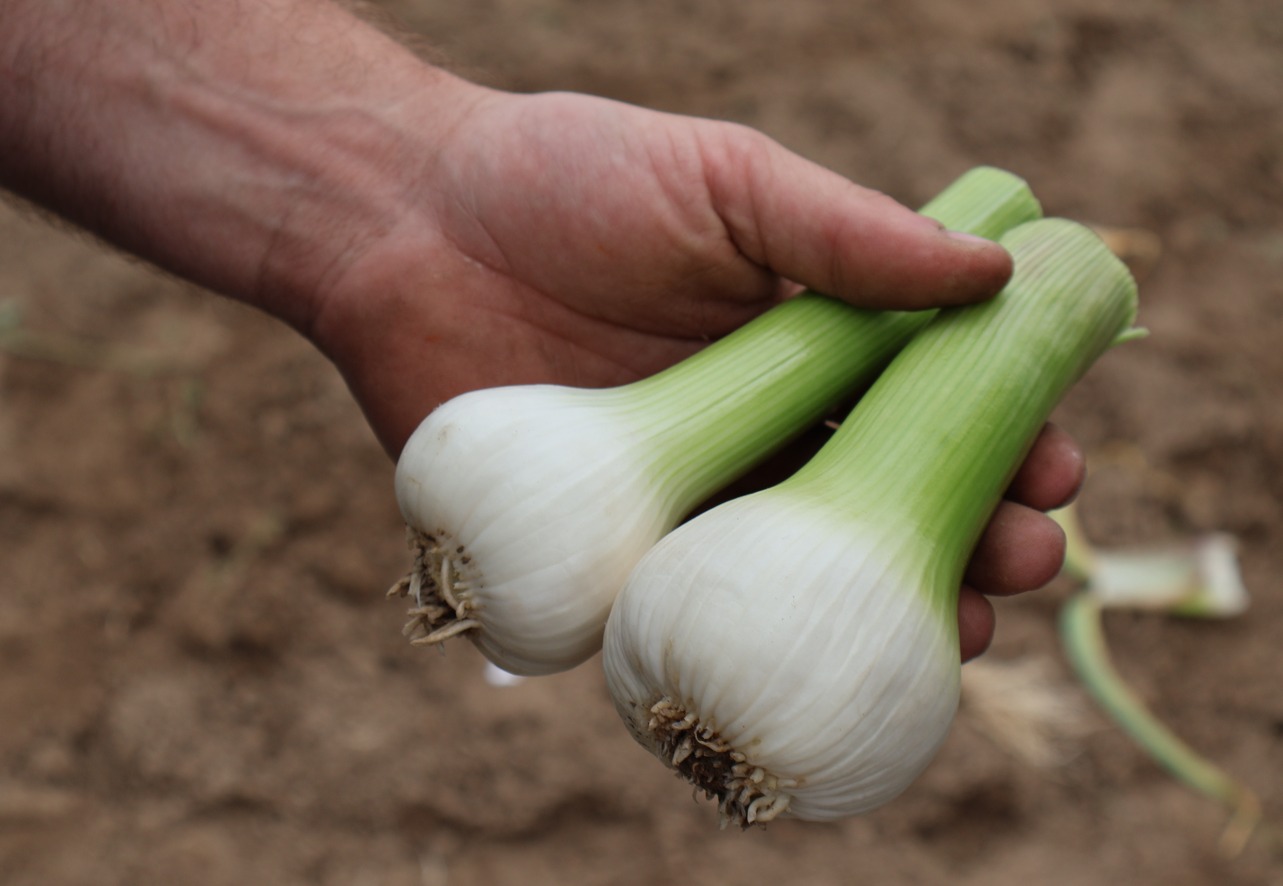
"If you're going to use that land after eight years of grassland, you want to make the most of the organic matter that has built up."
The move into vegetables also meant that Joost had to acquire new knowledge. Through his contacts with Urgenda and Meer Bomen Nu, he came across the e-learning of the Regeneratieve Alliantie. He took the course last year, and over the summer he prepared the soil by growing green manures and applying ferments. 2026 is the first real growing season, in which he is receiving intensive guidance from Dietmar Näser.
Not intervening straight away
The first results are positive. The garlic has now been harvested and grew well. With the cabbage and celeriac, Joost is seeing the same picture so far.
A striking example came in July. The cabbage was hit by aphids. The advice from a conventional adviser: probably spray with an approved organic product.
Joost decided to try something else first. It had already been dry for seven weeks, and yet the plants had grown well and formed substantial roots. But growth now seemed to be stalling because of the extreme drought. He sprayed the crop with compost tea and micronutrients to keep the plant vital. He then irrigated to wash the aphids off and to get growth and mineralisation going again. After that, he waited.
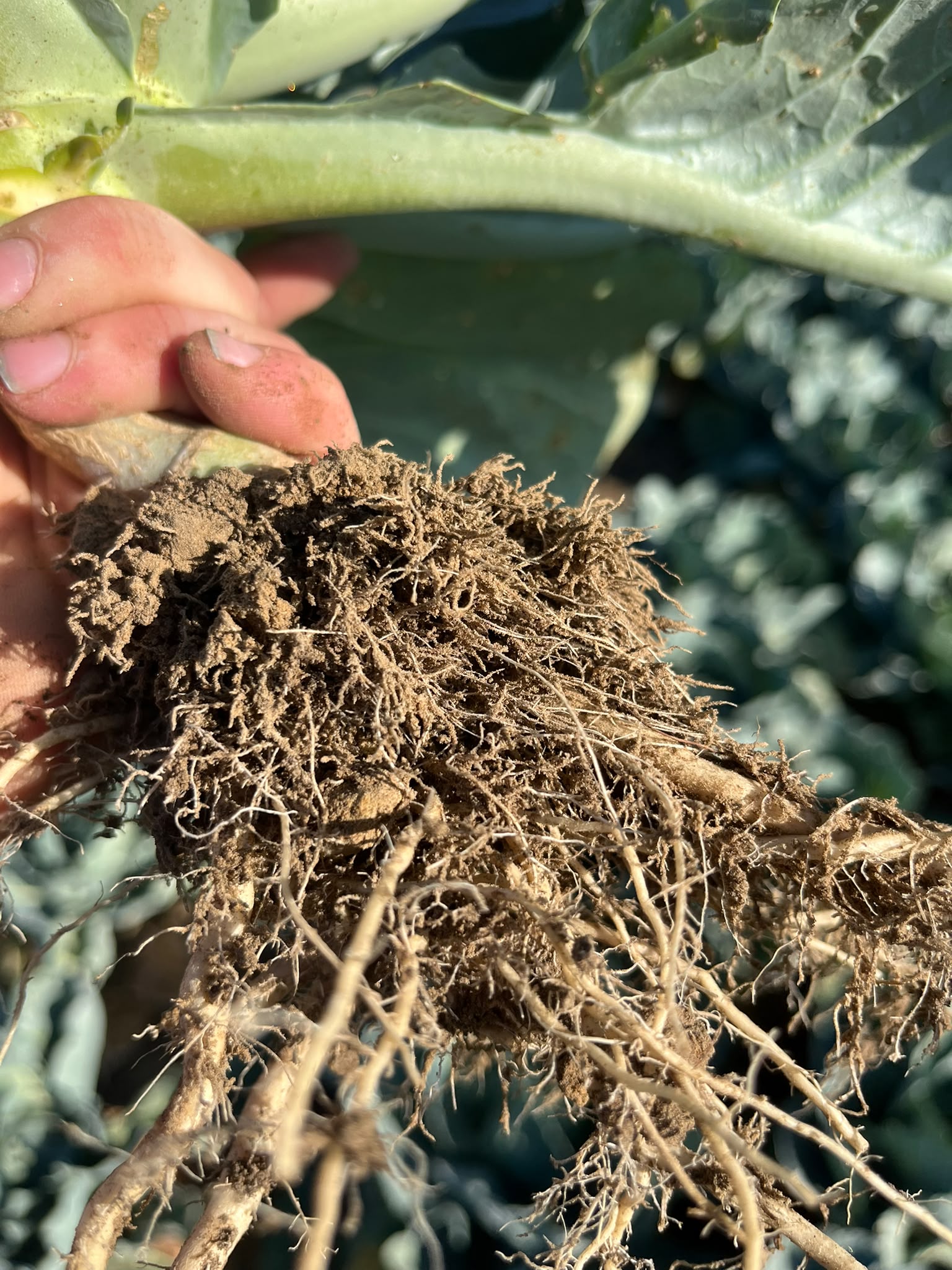
A week later, the aphids had disappeared. There turned out to be plenty of parasitoid wasps around, which had parasitised the aphids' eggs. Spraying was not necessary.
For Joost, that holds an important part of working regeneratively: making sure the plant is as vital as possible, monitoring closely, and not intervening automatically.
"A healthy plant is a resilient plant."
Less nitrogen than advised
Joost also took a different route when it came to fertilisation. Cabbage is a crop with a high nitrogen demand, and he was advised to apply a substantial top-up. But the cabbage grew so fast that he could no longer spread the organic manure pellets before the crop closed over.
He decided to try it without an additional nitrogen application.
Sap analyses now show that the plants' nitrogen uptake is more than sufficient. According to Joost, this means he is using around 100 kilos less pure nitrogen than the standard recommendation.
That can make a financial difference too. Had he spread the manure pellets, it would have cost around €800 per hectare. With a possible insecticide treatment on top of that, he estimates the saving at around €1,900 per hectare.
At the same time, Joost himself adds an important caveat. The land had been grassland for eight years and therefore already had a good starting position. And the season isn't over yet.
No simple recipe
Working regeneratively does not mean, according to Joost, that you simply avoid all problems. The approach calls for knowledge, experimentation and investment. Ferments and other treatments are not cheap, and sometimes you pay for the lessons you learn.
For intensive farms, the switch can also be difficult. Anyone with a tight cropping plan, high fixed costs and little room for rest crops cannot simply make different choices.
That is why Joost also sees opportunities in collaboration. An intensive arable farm could work together with a more extensive livestock farm, for instance, so that there is more room for a wider crop rotation and for the soil to recover.
For Joost, it starts above all with looking differently: first understand what is happening on the land, and only then decide what to do.
"The things described in the course are things we really do see happening."
His own first season is by no means proof that one approach works everywhere. But the first experiences give him confidence.
Learn hands-on regenerative farming practices
Do you want to get started with regenerative growing too? Take a look at our courses and learn how to put soil and plant health at the heart of the way you farm.